As we are in the midst of spooky season, I thought we’d explore two supernatural death omens from Wales this month. I’ve written of death portents before in my posts on Cŵn Annwn and owl folklore. In fact, I’ve come across a variety of death omens while researching Welsh folklore. Two that I’ve been thinking about recently, though, are the cyhyraeth and the cannwyll gorff (corpse-candle).
While these two omens were different in form, they shared a similar function and commonly cited origin. We’ll first learn more about the two omens, then we’ll look at the traditional origin story for them. As a content warning, this folklore is on a similar level to a ghost story. So if you’re ready, then let’s begin (although no judgment here if you want to grab a stuffed animal first). 🧸
The Cyhyraeth: “A Doleful Fore-Boding Noise Before Death”
Cyhyraeth is a word that dates back to the 15th century. The Geiriadur Prifysgol Cymru (A Dictionary of the Welsh Language) not only explains that the term served as a death portent in the past, but also offers several definitions including “skeleton,” “apparition,” and “wraith.”
I wanted you to have this visual in mind, because as a death omen, the cyhyraeth was described as something which was only heard and not seen. It was often referred to as a “crying spirit” whose voice (in the form of moans, cries, shrieks, and groans) was heard before a death.
The Reverend Edmund Jones recorded descriptions and accounts of the cyhyraeth in his book, Α Relation of Apparitions of Spirits, in the Principality of Wales, published in 1780. Jones succinctly defines the cyhyraeth as “a doleful fore-boding noise before death.” In his book, he provides an account given to him by Joshua Coslet of Carmarthenshire (near the River Tywi, also known as the River Towy), who states that the voice of the cyhyraeth resembled “the groaning of sick persons who are to die.” Coslet’s account further explains that the cyhyraeth issued a “three fold warning of death,” which he describes in this manner:
It begins strong, and louder then [sic] a sick man can make, the second cry is lower; but not less doleful, but rather, more so; the third yet lower, and soft like the groaning of a sick man, almost spent and dying; … If it meets any hindrance in the way, it seems to groan louder.

Jones states that while accounts of the cyhyraeth were primarily found in Carmarthenshire, he did hear of some accounts from St Mellons (Llaneirwg) in Monmouthshire. There, at times, the crying voice of the cyhyraeth was heard before a burial, following the path the deceased would be brought on to the church or grave.
Jones makes an additional observation that I found kind of humorous, considering the frightening aspect of the cyhyraeth. He explains that the phrase “Oh ‘r Kyhirraeth” was used as a reproach to someone making “a disagreeable noise” or “to Children crying and groaning unreasonble [sic].” As a parent, I can completely relate. 😉
I also came across a description of the cyhyraeth as sea-oriented, death portent. In British Goblins: Welsh Folk-Lore, Fairy Mythology, Legends and Traditions, Wirt Sikes writes of cyhyraeth hearings along the coast in Glamorganshire. Sometimes the moans of the cyhyraeth accompanied “those dismal lights which forebode a wreck … seen playing along the waves.” At other times, the cries of the coastal cyhyraeth seem more similar to the land-based accounts. Sikes writes:
Watchers by the sea-shore have also heard its moan far out on the ocean, gradually drawing nearer and nearer, and then dying away; and when they thought it gone it has suddenly shrieked close to their startled ears, chilling their very marrows. Then, long after, they would hear it, now faint, now loud, going along the sands into the distant darkness. One or more corpses were usually washed ashore soon after.
Whether inland or by the sea, folks feared the plaintive voice of the cyhyraeth. I think I would have too, as loud or scary noises make me jump. Now we’ll switch gears and learn about a supernatural omen that you could see.
The Cannwyll Gorff (Corpse-Candle)
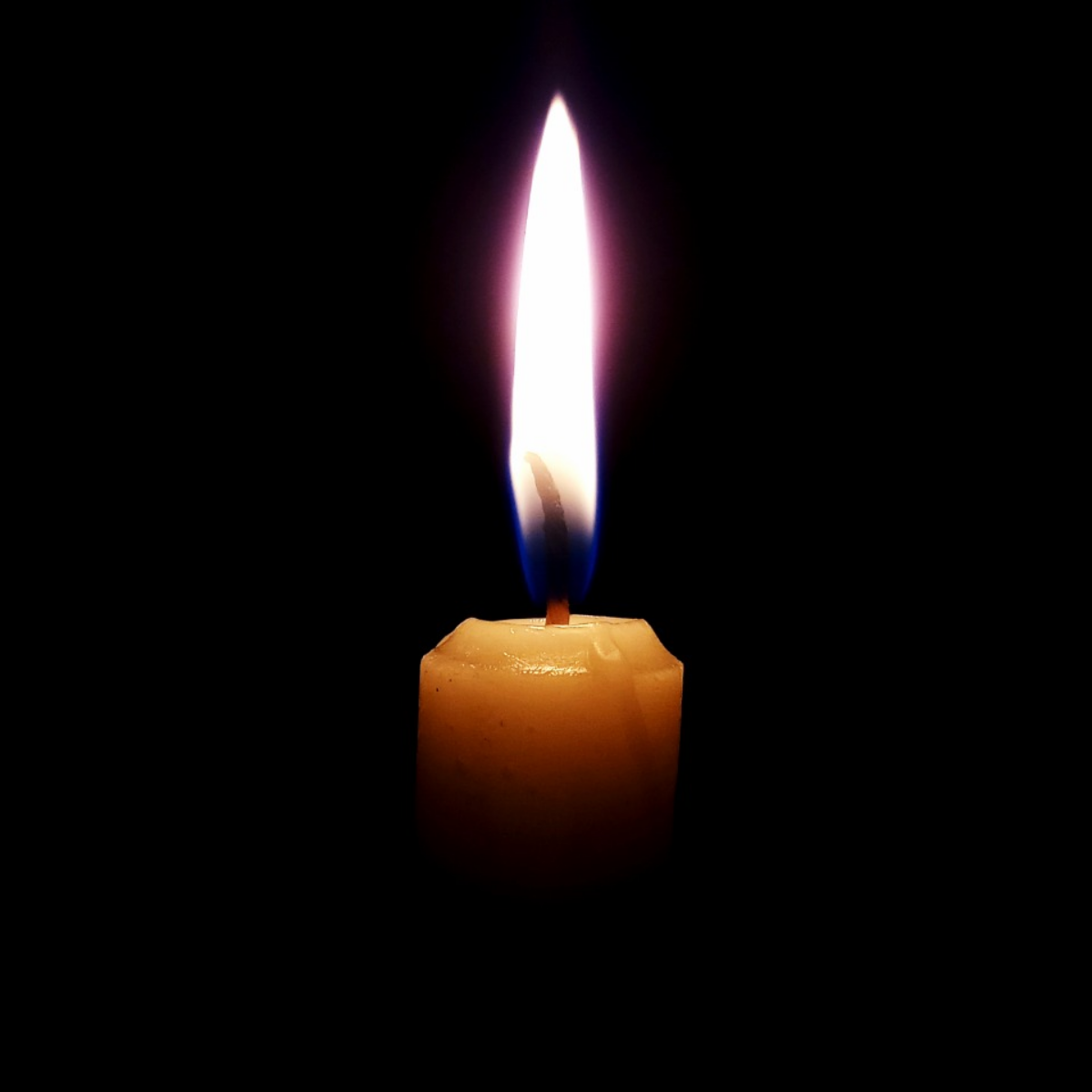
Cannwyll gorff (sometimes written as cannwyll corff) is a self-descriptive term. Cannwyll is a candle, while corff (in this use) refers to a corpse. According to the Geiriadur Prifysgol Cymru, cannwyll gorff means “fetch-light” or “corpse-candle.”
Like the cyhyraeth, the cannwyll gorff was a supernatural death portent; however, the cannwyll gorff took the form of a flame or light, rather than a noise. In Welsh Folk-Lore: A Collection of the Folk-Tales and Legends of North Wales, Elias Owen describes the cannwyll gorff in this way:
The corpse candle, or canwyll corph, was a light like that of a candle, which was said to issue from the house where a death was about to occur, and take the course of the funeral procession to the burial place. This was the usual way of proceeding, but this mysterious light was also thought to wend its way to the abode of a person about to die. Instances could be given of both kinds of appearances.
Both Owen and the Reverend Edmund Jones offer accounts of folks encountering the cannwyll gorff as it traveled along its course. At one point in his book, Jones includes a brief summary of what people witnessed when they saw the cannwyll gorff. He writes:
Some have been so hardy as to lye [sic] down by the way side where the Corpse-Candle passed, that they might see what passed; for they were not hurted [sic], who did not stand in the way. And some have seen the resemblance of a Skul [sic] carrying the Candle, others the shape of the person that is to die, carrying the Candle between the forefingers, holding the light before its face. And some have said that they saw the shape of those who were to be in the burying.
In most of Jones’ accounts, there seems to be an apparition or spirit of some kind carrying the cannwyll gorff. However, in some of Owen’s descriptions, the cannwyll gorff itself is the sole apparition—nothing can be seen carrying it.

Interestingly, the cannwyll gorff seemed to have a low tolerance for any kind of interference. I read of several accounts where someone tried to hinder it on its journey, then received a swift repercussion from the cannwyll gorff itself. Jones alludes to this in the passage above, when he notes that folks who stayed out of its way when it passed were not harmed by it.
Owen also addresses this aspect of the cannwyll gorff and writes that “it was ill jesting with the corpse candle.” Both Jones and Owen include accounts of drunk men who come across the cannwyll gorff and decide it would be a good idea to mess with it. In one a man went too close and was “struck down from his horse;” in another, a sailor tried to “light his pipe at it, but he was whisked away, and when he came to himself he discovered that he was far off the road in the bog.” Moral of the story: best to leave the cannwyll gorff alone.
Traditional Origin Story for the Cannwyll Gorff (and maybe the Cyhyraeth?)
For the Reverend Edmund Jones, collecting accounts of the apparitions of spirits wasn’t just to create a record of the supernatural folklore of Wales. His primary goal was to prove that spirits really existed, and therefore, so did God. Jones addresses the topic extensively in the preface of his book. His larger concern seems to be this: “… for when men come to deny the being of Spirits, the next step is to deny the being of God who is a Spirit, and the Father of Spirits.”
Keeping this in mind will help us to understand the origin story of the cannwyll gorff more deeply. Jones states that the cannwyll gorff was “an effect of St David’s Prayer.” He explains that St. David, after “observing that the people in general were careless of the life to come,” prayed to God. Jones writes:
… [St. David] prayed God to give a sign of the immortallity [sic] of the soul, and of a life to come, a presage of death and a motive to prepare for it; and that God in answer to his prayer sent the Corpse-Candles, and likely the Kyhirraeth to answer the same pious end. This is the tradition in the Country about it.

In this way, Jones believed that the cannwyll gorff (and possibly the cyhyraeth) served a greater purpose than simply operating as a death portent. For him, accounts of the cannwyll gorff provided reassurance that spirits and God existed, yielded evidence that the soul was immortal, and indicated that there was “a life to come.”
I find the Reverend Edmund Jones’ folklore collection to be intriguing—it offers insights into his beliefs, various Welsh communities, and the time period in which he lived. But not all readers and folklorists would agree.
In “Edmund Jones and the Pwcca’r Trwyn,” Adam N. Coward notes that while Jones’ book is a good source for exploring Welsh folklore, it has been “underutilized.” Coward explains that some folklorists have disregarded Jones’ writings, while others only reference his work in an abridged way, often with his religious context removed. Coward asserts that beyond providing folk beliefs and accounts of the supernatural, it is precisely “Jones’s explanation and rationality” that allow for a better understanding of the culture, religious beliefs, and history of eighteenth-century Wales.
Thank you for exploring Welsh supernatural folklore with me! Researching and writing these articles is a joy, and I’m glad that you’re here learning along with me. If you know someone fascinated by folklore, feel free to share this post with them.
Photo credit (featured image): Glowing Candle on a Dark Background by Tmax1998 via Wikimedia Commons, licensed under CC BY-SA 4.0, cropped